For Bee Day on May 20th, we took a closer look at nature's little helpers. In addition to honey production, they also have other important tasks. Without bees, our fruits would not be so numerous and diverse. Why? You can read about this in the interview with Michael Gelhaus, bee expert from nearBees . Nearbees helps hobby beekeepers to market their honey, sell it regionally and thus counteract the death of bees. We asked the start-up's managing director a few questions about the flying flower lovers.
Michael, why are bees so important for our environment? And what exactly do the little helpers do besides honey?
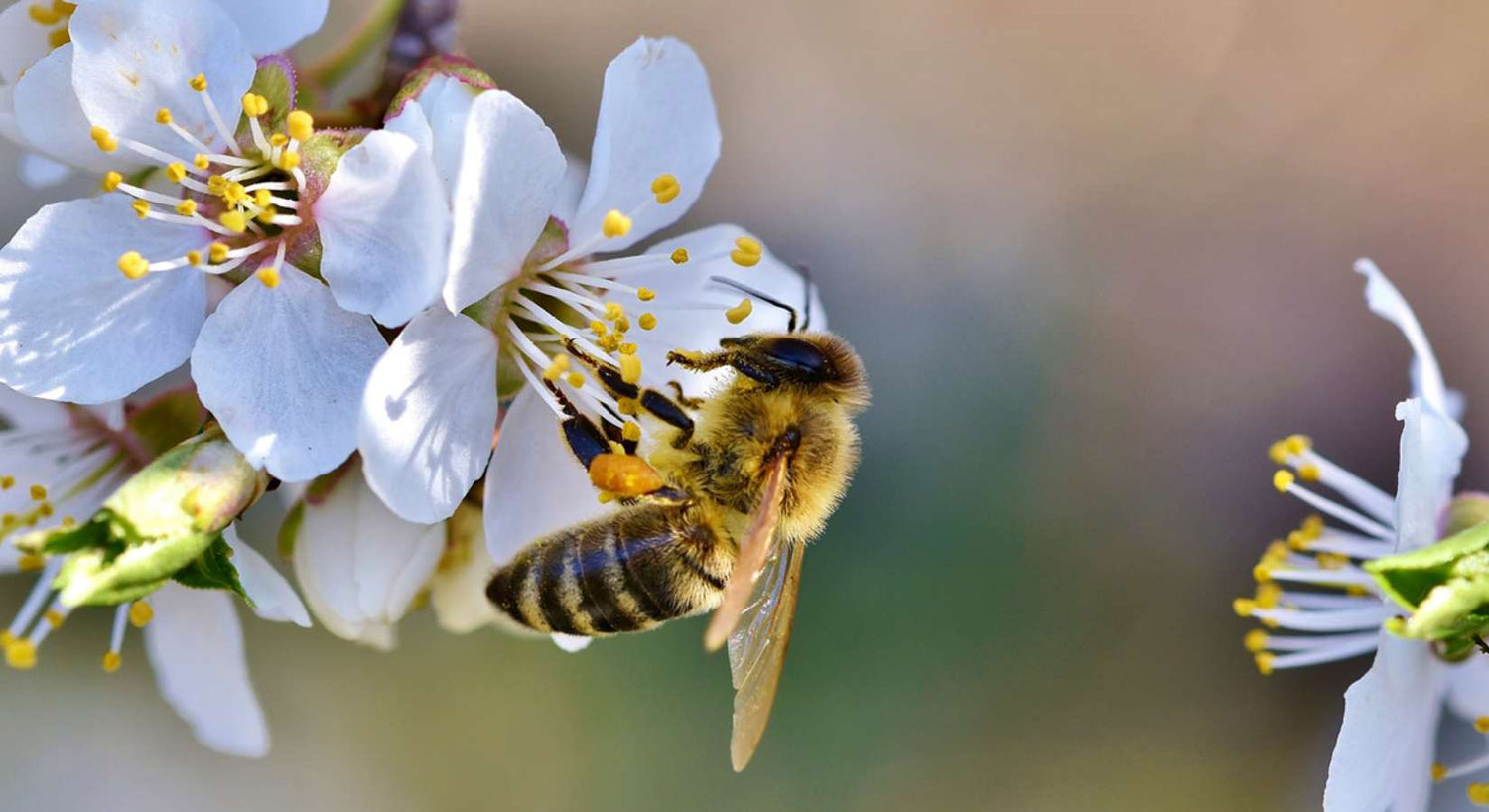
Both honey and wild bees are essential for a colorful, blooming, species-rich and healthy nature: in search of nectar and pollen, they pollinate - almost incidentally - thousands of plants. Around 80 percent of our native flora relies on pollination by insects. The fewer bees there are, the fewer plants are pollinated. Natural biodiversity and thus the homes of numerous living creatures would be irretrievably lost, while we are faced with fruit and vegetable shelves that are becoming increasingly empty and boring.
And how do they help our fruits?
Bees are irreplaceable in pollinating fruit and vegetable crops around the world. Thanks to them and other pollinating insects, not only the quantity of harvests increases, but also their quality: the fruits become larger, heavier and more beautiful. In Germany, bees ensure, among other things, high harvest yields of berries, stone fruit and pome fruit. Without their pollination performance, dried berries , apple pie, cherry jam, etc. would be a thing of the past.
The death of bees is on everyone's lips. But what does that mean exactly? Why are so many bees dying?
The death of bees has various causes, one of which is advancing climate change. The bees, whose lives are clearly timed according to temperature and season, are confused by the changing climatic conditions - for example, it can happen that they fly out too early in the year due to the mild winters and cannot find food because the plant world is not ready yet . In addition to climate change, agricultural changes are also causing them problems. On the one hand, they only find monotonous food due to monocultures, and on the other hand, they become ill or die from plant protection products and pesticides. Finally, the decline in beekeeping also means that there are fewer bees. They rely on the care and attention of their beekeepers as they cannot protect themselves from parasites and other intruders.
And how can we humans help the bees?
Fortunately, there are many ways to support the well-being of our local bees. The most effective way is of course to keep bees yourself, but of course this is only possible for a few people. It is therefore all the more important to support regional (hobby) beekeepers - for example by purchasing their honey. This allows them to continue their time- and cost-intensive hobby and at the same time invest in the well-being of their bees. Because even if honey can be imported from abroad, the pollination performance of the bees cannot.
Anyone who is lucky enough to have a garden or balcony can plant them in a bee-friendly way and create small, delicious paradises for the bees in their own neighborhood.
But what can you do if you live in the city in an apartment without a balcony?
Consciously choosing food can also help bees in other areas. Purchasing and consuming organic and local products supports pesticide-free and varied agriculture.
How do you help the bees at nearBees?
We would like to offer more bees a habitat by offering hobby beekeepers the opportunity to market their honey easily and independently. On nearBees.de, beekeepers can offer their honey in any quantity and at specific prices. Honey fans can then specifically search for honey from their neighborhood or other parts of Germany and request it directly from the beekeepers.
We also offer sponsorships for private individuals and companies. New bee colonies are created, beekeepers are supported and at the same time valuable knowledge about bees and their keeping is imparted. Last but not least, we also sell bee-friendly seeds with which even the smallest balcony can be transformed inexpensively and easily into a delicious bee buffet. With our ideas we would like to show every single person ways to protect bees - no matter what financial or time budget is available. Because the bees depend on our help here and now! Regardless of whether we plant a flower box, buy local honey, take on a sponsorship or pass on knowledge about bee protection: together we can ensure more bees.